
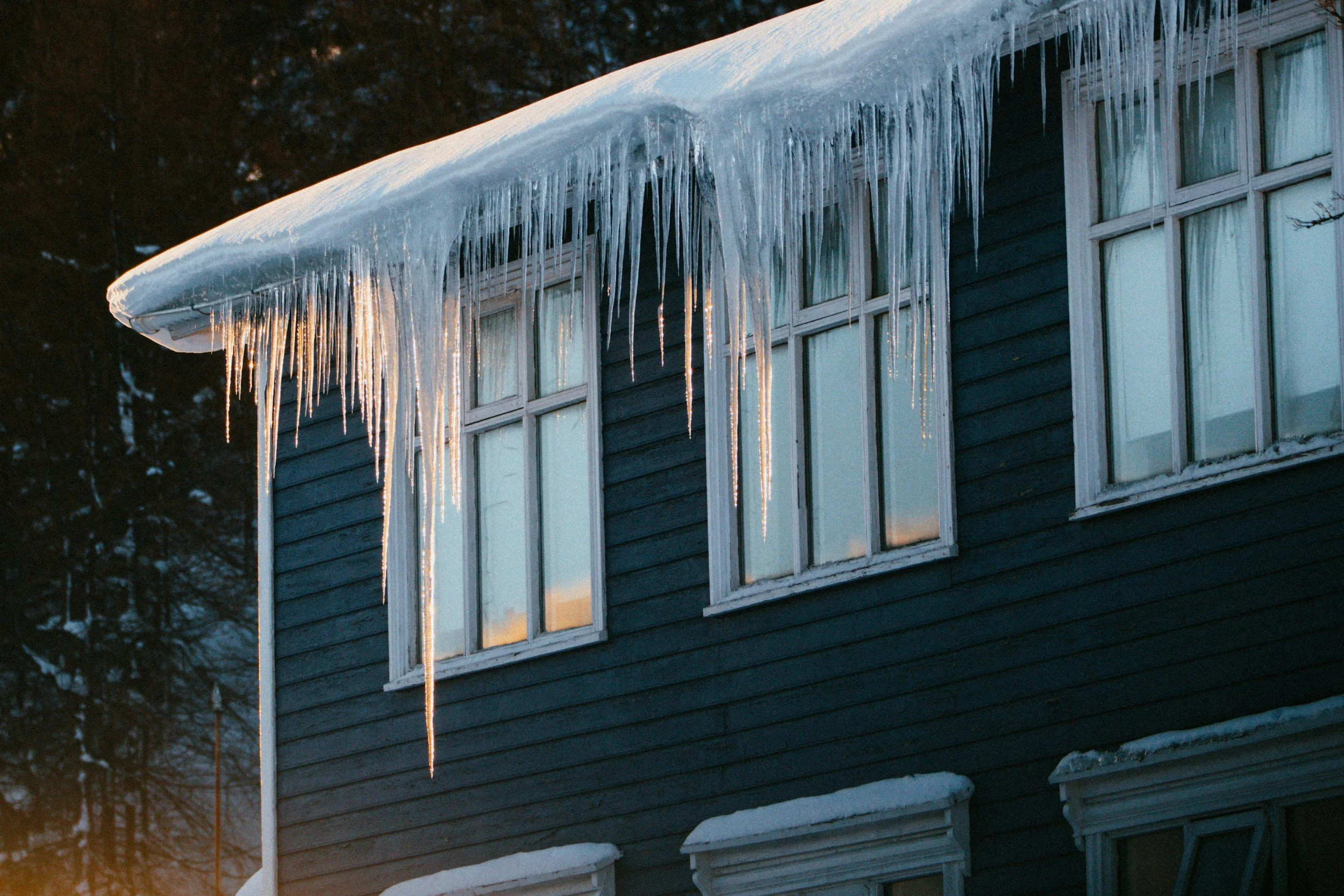
Winter in Minnesota brings snow-covered rooftops, freezing temperatures, and plenty of icicles hanging from gutters. While icicles may look like a normal part of winter, they can sometimes signal a bigger roofing problem.
One of the most common questions homeowners ask is: What's the difference between ice dams and icicles?
Although both involve frozen water, they form differently and don't always pose the same risks to your roof.
Icicles are hanging formations of ice created when dripping water freezes. Ice dams, on the other hand, are ridges of ice that develop along roof edges and can prevent melting snow from draining properly.
Understanding the difference can help you recognize potential roof damage, prevent costly leaks, and protect your home throughout Minnesota's winter months.
Here's what homeowners in Mankato and Southern Minnesota should know about ice dams vs. icicles.
What Are Icicles?
Icicles form when water drips from a surface and freezes before reaching the ground.
During winter, sunlight, warmer temperatures, or heat escaping from a building can cause snow and ice to melt. When that water reaches a colder surface, such as a gutter or roof edge, it may refreeze and form icicles.
As more water drips and freezes, the icicle grows longer.
Are Icicles on Your Roof Normal?
Small icicles can develop during typical winter weather and don't automatically mean your roof is damaged.
However, large or recurring icicles may indicate that melting snow is repeatedly reaching a cold roof edge or gutter.
Watch for:
Large clusters of icicles along gutters
Ice repeatedly forming in the same locations
Frozen downspouts
Water spilling over gutter edges
Ice buildup near entrances or walkways
Even when icicles aren't associated with roof damage, falling ice can create a safety hazard.
Avoid standing or walking beneath large icicles, and don't attempt to knock them down from an unsafe position.
What Is an Ice Dam?
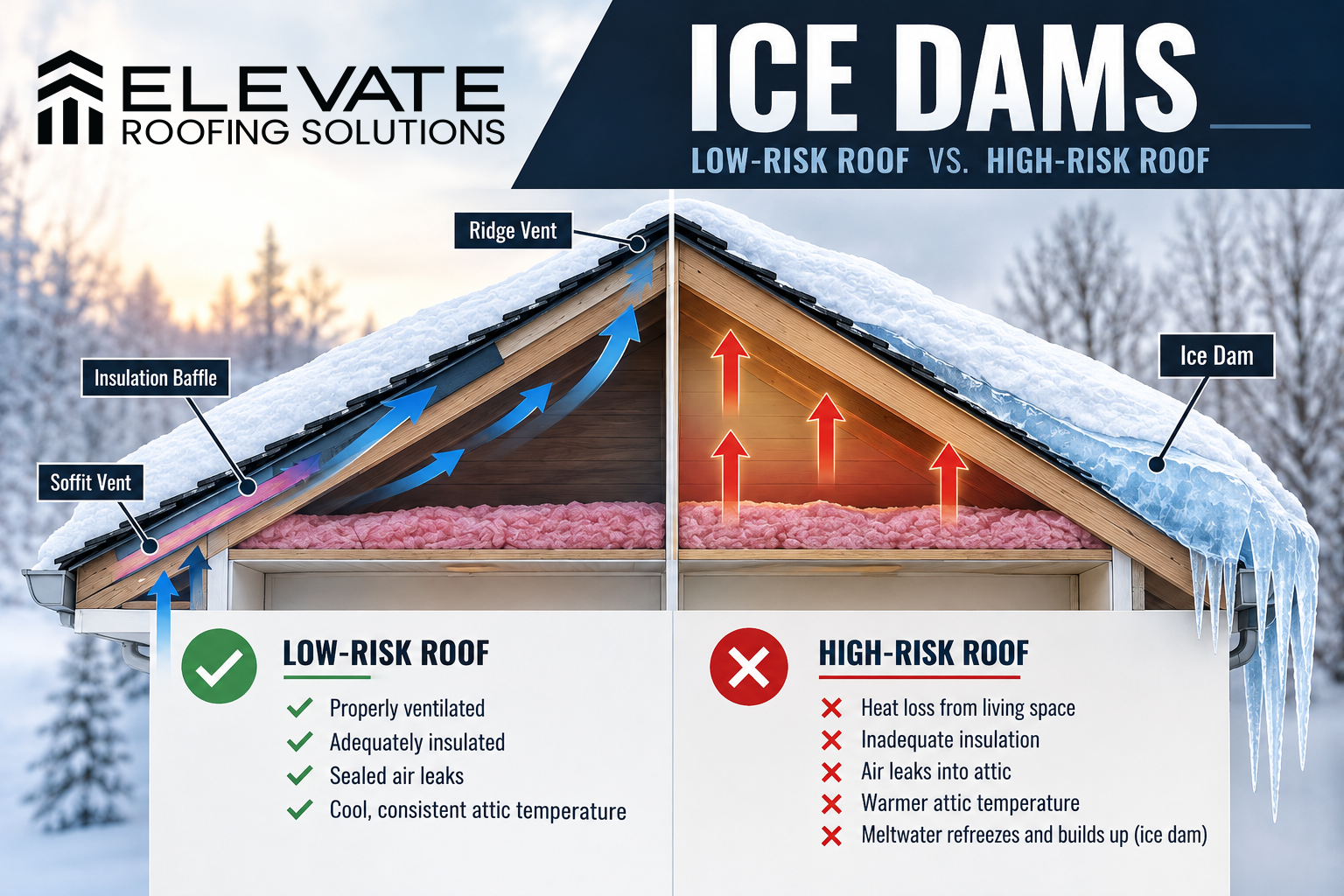
An ice dam is a ridge of ice that forms near the edge of a roof and blocks melting snow from draining normally.
Unlike an icicle, which hangs downward, an ice dam typically builds up along the roof surface or eave.
When water accumulates behind the ice, it may work beneath shingles or other roofing materials and enter the home.
According to the University of Minnesota Extension, ice dams commonly develop when heat escapes from the home and warms portions of the roof while the eaves remain below freezing.
How Do Ice Dams Form?
The process generally happens in four stages:
Heat from the home warms portions of the roof.
Snow on the warmer roof surface begins melting.
Meltwater flows toward colder roof edges.
The water refreezes, forming a ridge that blocks additional drainage.
As the ice dam grows, water can collect behind it.
That trapped water creates the potential for roof leaks and interior water damage.
Ice Dams vs. Icicles: Key Differences
Although ice dams and icicles may appear together, they aren't the same thing.
| Feature | Icicles | Ice Dams |
|---|---|---|
| Appearance | Hanging spikes of ice | Ridges of ice along roof edges |
| Formation | Dripping water freezes | Meltwater refreezes and builds up |
| Main concern | Falling ice and possible drainage problems | Water backing up beneath roofing |
| Roof damage | Not necessarily | Can contribute to leaks and water damage |
| Prevention | Manage runoff and drainage | Address heat loss, air leakage, and insulation |
| Professional help | When ice presents hazards | When ice buildup or leaks are significant |
Important: You can have icicles without an ice dam, and an ice dam may form without large, visible icicles.
7 Warning Signs of Ice Dam Problems
Not every icicle indicates an emergency, but certain warning signs deserve attention.
1. Thick Ice Ridges Along the Roof Edge
A continuous ridge of ice near the eaves is one of the clearest signs of an ice dam.
It may appear as a thick band of ice stretching along the roofline.
2. Large Icicles Appearing Repeatedly
Large icicles don't prove that an ice dam exists, but recurring clusters can indicate repeated melting and refreezing.
Pay particular attention when they're accompanied by heavy ice buildup on the roof.
3. Water Stains on Interior Ceilings
Yellow or brown stains near exterior walls or ceilings may indicate that water is entering the home.
If stains appear during snowmelt, an ice dam may be one possible cause.
4. Damp Attic Insulation
Moisture entering the roof assembly can affect insulation and nearby building materials.
Damp insulation may also result from condensation, so the source should be investigated.
5. Peeling Paint or Bubbling Drywall
Repeated moisture exposure can cause paint to peel, drywall to soften, and interior finishes to deteriorate.
These problems may become more noticeable during winter thaws.
6. Gutters Filled With Ice
Ice-filled gutters can occur alongside ice dams and interfere with drainage.
However, frozen gutters alone don't necessarily mean an ice dam has formed on the roof.
7. Water Leaking During Warmer Winter Days
If your roof leaks when temperatures rise above freezing, melting snow may be finding a pathway into the roofing system.
A professional inspection can help determine whether ice dams, damaged flashing, shingles, or another issue is responsible.
Can Icicles Cause Roof Damage?
Icicles themselves don't always damage roofing materials, but large ice formations can create problems.
Heavy ice may place stress on gutters, fascia, and attachments. Falling ice can also damage property or injure people below.
If icicles develop alongside an ice dam, trapped meltwater may contribute to leaks beneath the roofing materials.
The important distinction is that icicles are not automatically evidence of a failing roof.
Their location, size, frequency, and surrounding conditions matter.
Why Are Ice Dams Common in Minnesota?
Minnesota winters create favorable conditions for ice dam formation.
Snow can remain on rooftops for extended periods, while indoor heating keeps living spaces warm.
If heated air escapes into the attic, it may warm portions of the roof enough to melt snow even when outdoor temperatures remain below freezing.
That water can refreeze when it reaches colder eaves.
The U.S. Department of Energy explains that sealing air leaks helps control unwanted air movement between conditioned and unconditioned spaces.
For ice dam prevention, proper attic air sealing and insulation are particularly important.
Roof ventilation may also play a role when correctly designed as part of the overall attic system.
How to Prevent Ice Dams and Excessive Icicles
Preventing ice dams usually requires addressing the conditions that cause uneven roof temperatures.
Improve Attic Air Sealing
Warm indoor air can escape through openings around:
Recessed lights
Plumbing penetrations
Electrical openings
Attic access panels
Ductwork
Ceiling gaps
Sealing these pathways can reduce heat loss into the attic.
Check Attic Insulation
Proper insulation helps reduce heat transfer from living spaces into the attic.
Insulation levels should be evaluated alongside air sealing rather than treated as a separate solution.
Evaluate Roof Ventilation
A properly designed attic ventilation system can help manage attic conditions.
However, ventilation alone won't correct significant air leakage or inadequate insulation.
Keep Gutters and Downspouts Clear
Remove leaves and debris before winter to help water drain during warmer periods.
Clear gutters won't eliminate ice dams caused by roof heat loss, but they can reduce additional drainage problems.
Schedule a Roof Inspection
A professional roofing inspection can help identify damaged shingles, flashing concerns, vulnerable roof edges, and other areas that may contribute to water intrusion.
Should You Remove Ice Dams Yourself?
Removing ice from a roof can be dangerous.
Snow-covered roofs, icy ladders, falling ice, and overhead hazards create serious injury risks.
Avoid:
Climbing onto an icy roof
Chipping ice with axes or metal tools
Using open flames or torches
Pouring boiling water onto frozen roofing
Using a pressure washer on frozen shingles
Standing beneath heavy icicles
These methods can damage roofing materials or put you at risk.
If an ice dam is causing an active leak, contact a qualified professional who has the appropriate equipment and experience to evaluate safe removal options.
Some professionals use controlled steam equipment for ice dam removal, but methods should be appropriate for the roof and performed safely.
Will Ice Dams Go Away on Their Own?
Ice dams may eventually melt as temperatures rise, but that doesn't mean the underlying problem has been resolved.
If attic heat loss, air leakage, or insulation deficiencies remain, ice dams may return during future winters.
Water damage may also continue while the ice is melting.
If you've experienced repeated ice dams, it's worth investigating the cause rather than waiting for spring.
Does Homeowners Insurance Cover Ice Dam Damage?
Homeowners insurance may cover certain sudden water damage associated with ice dams, but coverage depends on the policy, exclusions, deductibles, and circumstances.
Coverage for the underlying cause, preventive work, or ice removal may differ from coverage for resulting damage.
If you experience damage, document the affected areas and contact your insurance company promptly to understand your specific policy.
A roofing contractor can inspect and document roofing conditions, while your insurer determines coverage.
When Should You Call a Roofing Contractor?
Consider scheduling a professional inspection if you notice:
Recurring ice dams
Interior water stains
Active roof leaks
Damaged shingles or flashing
Heavy ice buildup near roof edges
Repeated winter moisture problems
Visible damage after snow or ice accumulation
A professional can help identify whether the problem involves the roofing materials, drainage, attic conditions, or a combination of factors.
Not every ice dam requires a roof replacement. In many cases, addressing the underlying cause and repairing localized damage may be more appropriate.
Ice Dam and Winter Roof Inspections in Mankato, MN
Minnesota winters can be demanding on residential roofing systems, especially when heavy snowfall is followed by warmer temperatures and refreezing.
At Elevate Roofing Solutions, we help homeowners in Mankato and Southern Minnesota understand the condition of their roofs and identify potential winter roofing concerns.
Whether you've noticed ice buildup, damaged shingles, water stains, or recurring roof leaks, a professional inspection can help determine the next step.
Your roof should protect your home through every season—not leave you wondering where the next leak will appear.
Ice Dams vs. Icicles: Know the Difference Before Damage Happens
Icicles and ice dams may look similar, but their impact on your home can be very different.
Icicles form when dripping water freezes, while ice dams create barriers that can trap melting snow and allow water to enter vulnerable areas of the roof.
The key is recognizing when ordinary winter ice buildup may be signaling a more serious problem.
Don't wait for a ceiling stain or active roof leak to investigate recurring ice dams.
Contact Elevate Roofing Solutions to schedule a roof inspection in Mankato or Southern Minnesota and help protect your home from winter roof damage.